The business environment for Japanese companies has become more complicated, with more risks. Corporate misconduct and scandals are occurring more often, and they are also becoming more sophisticated and harder to detect. As a result, these issues have become a serious concern for company management.
A clear example is the 2025 Corporate Image Deterioration Ranking. This involved a Mitsubishi UFJ Bank employee who stole 1.7 billion yen from customers’ safety deposit boxes. This incident highlights the growing threat of internal crime and the severe loss of trust it causes. Such misconduct can significantly damage a company’s reputation and corporate value.
To prevent this, investigative services—such as those offered by private investigators—have become an important resource for executives, board members, and corporate leaders. Understanding when and how to use these services can help companies manage risks effectively. This article explores the value of investigative services and examines real-world examples to show how they can help reduce risk and protect corporate integrity.
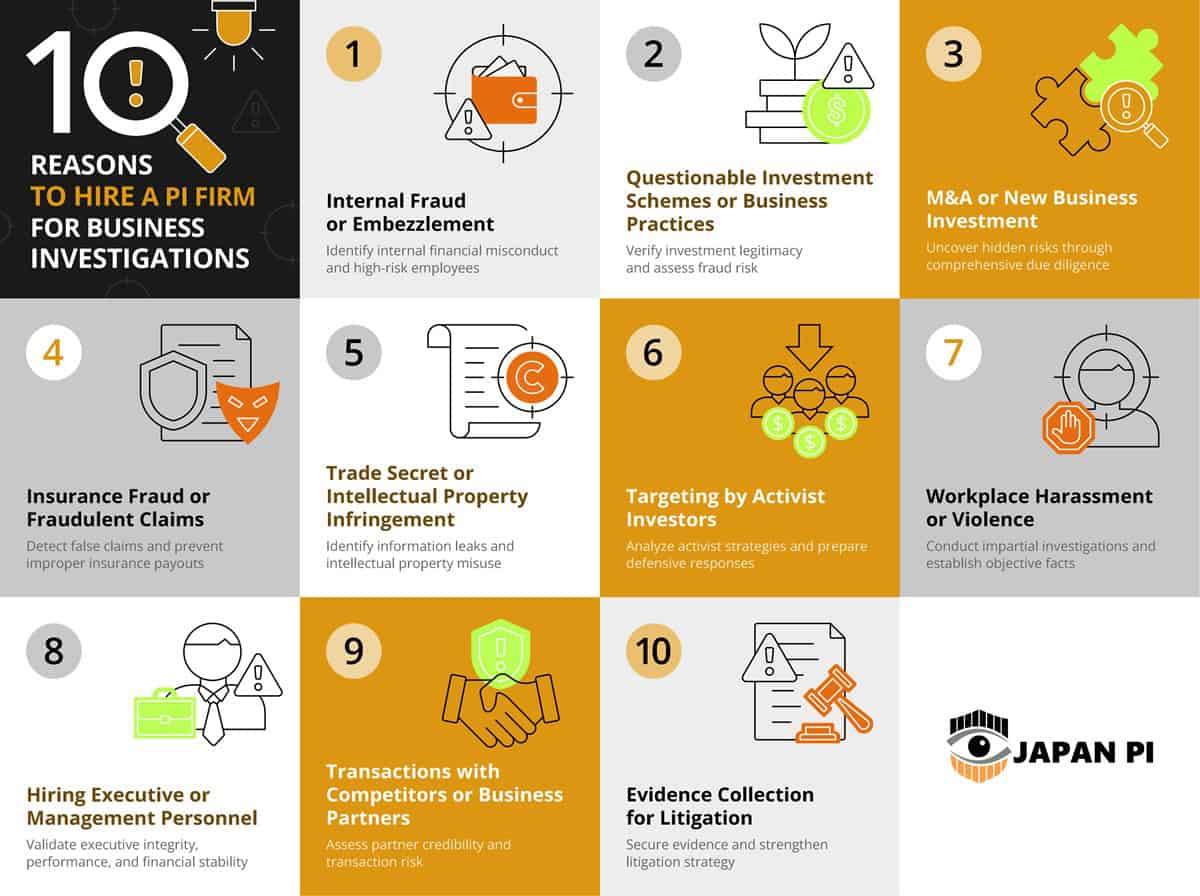
When You Detect Signs of Internal Fraud or Embezzlement
In a recent high-profile case that occurred in 2025, an employee of Mitsubishi UFJ Bank misappropriated assets valued at approximately 1.7 to 1.8 billion yen from roughly 100 customers. A severe Forex trading addiction and mounting personal debt reportedly drove the perpetrator. This incident follows a late-2024 case in Mie Prefecture, where a treasurer embezzled 170 million yen to fund excessive “fan activity” expenditures. Together, these cases highlight the increasing corporate risk posed by employees facing personal financial difficulties.
To mitigate these risks, organizations should implement rigorous background screenings at two critical junctures:
1. Personnel Promotions and Departmental Transfers
It is essential to conduct thorough investigations before moving staff into roles with financial oversight. By auditing debt history and bankruptcy records, along with background investigations that include OSINT (Open Source Intelligence) searches to detect behavioral red flags, companies can proactively identify high-risk candidates.
2. Detection of Behavioral Shifts
Management should remain vigilant for sudden changes in an employee’s lifestyle. Signs of spending beyond one’s visible means or displays of luxury consumption on social media warrant immediate, professional background inquiries.
Early intervention is the most effective way to prevent catastrophic financial loss and the erosion of corporate integrity.
When You Find Signs of Investment Schemes or Fraudulent Business Practices
In the Kyosei Bank “Minna de Oyasan” Incident that garnered public attention in 2024, suspected to be the largest Ponzi scheme in Japan, the company collected approximately 200 billion yen from around 38,000 people. In June 2024, the relevant authority imposed administrative penalties for violations of the Real Estate Specified Joint Enterprise Act. Thorough due diligence is essential for such large-scale investment projects.
Optimal Timing for Investigation Implementation
Vetting New Business Partners Before Finalizing Contracts
It is crucial to mitigate transactional risk. You can achieve it through on-site operational audits, comprehensive background screenings of key personnel, and rigorous verification of the proposed project’s viability.
Addressing Rumors of Executive Misconduct
When allegations arise regarding a partner executive’s investment activities, a targeted investigation is required. By clarifying the reality of their personal investments and identifying potential conflicts of interest, you can assess the risks associated with the ongoing partnership and gather the necessary intelligence for informed decision-making.
During the M&A and Business Investment Consideration Phase
While M&A (Mergers and Acquisitions) is becoming an increasingly common solution to Japan’s corporate succession gap—which now stands at 52.1%—a staggering 30% of these deals fail due to inadequate due diligence. To mitigate this risk, you should conduct thorough investigations at the following three critical stages:
1. During the Initial Selection of Target Companies:
Assess the suitability of potential acquisition candidates by conducting comprehensive background checks on management, verifying past performance metrics, and confirming any involvement in scandals or legal cases.
2. Before Signing the Basic Agreement:
Identify any fatal risks by investigating regulatory compliance, confirming past administrative penalties or business improvement orders, and checking for disciplinary actions from industry authorities.
3. Before Signing the Final Contract:
Achieve comprehensive risk management by evaluating potential labor issues, such as unpaid overtime or working hour violations, and analyzing the risk of litigation from former employees.
When Insurance Fraud or Fraudulent Claims Are Suspected
In 2024, six people, including a company executive, an administrative scrivener, and osteopathic clinic staff in Fukuoka Prefecture, conspired to fraudulently claim they attended treatment for “about 6 months” when they actually only participated for one day, illegally receiving approximately 2.53 million yen in treatment fees and compensation from auto insurance companies. Between 2024 and 2025, a judo therapist and two insurance policyholders in Hokkaido allegedly pretended to be injured in traffic accidents. They falsely claimed 109 visits to an osteopathic clinic, despite having no actual attendance record, thereby illegally receiving approximately 2.486 million yen in treatment fees.
In 2023, a male policyholder in his 40s was arrested for forging documents, including medical certificates, to fraudulently receive insurance money and benefits from Nissei Insurance.
Investigation Implementation Timing:
When Medical Insurance Claims Show Abnormal Increases
Through detailed analysis of medical records, evaluation of treatment appropriateness, and verification of medical cost adequacy, you can objectively assess and identify fraudulent claims.
When Questions Arise About Auto Accident Circumstances
By verifying consistency between physical evidence and claim contents, conducting on-site investigations at repair shops, and objectively reconstructing accident scenarios, you can determine the likelihood of fraud.
When You Discover Abnormal Patterns in Workers’ Compensation Claims
Through continuous behavioral confirmation of victims and objective proof of inconsistencies with reported content, you can substantiate fraudulent claims.
When Suspicions of Trade Secret or Intellectual Property Rights Infringement Surface
A recent survey from the Information-technology Promotion Agency (IPA) reveals a startling trend: trade secret leaks are on the rise. According to their 2024 findings, 35.5% of companies have experienced such a leak in the last five years. This represents a dramatic increase from 5.2% in 2020, underscoring a critical security challenge for businesses.
When should you investigate a potential leak?
1. When a Key Technical Employee Resigns:
It’s crucial to prevent confidential information from leaving with them. Monitor the departing employee’s external communications by internal digital forensic investigations and utilize OSINT (Open-Source Intelligence) to identify any unusual activity. Investigate any signs that they may have copied or removed sensitive data.
2. When a Competitor Launches a Suspiciously Similar Product:
If you suspect a rival has exploited your leaked technology, it’s time to take action. Confirm if someone has used your technology without authorization, investigate the activities of former employees now working for the competitor, and gather evidence of intellectual property infringement to prepare for legal action.
When Targeted by Activist Investors
The number of activist funds in Japan has surged to 74, a more than sevenfold increase over the last decade, intensifying pressure on Japanese companies.
Proactive investigation is key to navigating this new landscape. Here’s when and how to respond:
When an Activist Fund Discloses a Large Holding in Your Company:
Conduct a detailed analysis of the fund’s history, including past shareholder proposals, success rates, and intervention methods at similar companies. This research will help you anticipate their moves and prepare an effective response strategy.
When a Confrontation at the Shareholder Meeting is Likely:
Prepare for a potential proxy battle by investigating the activist’s funding sources and supporter networks. Analyze their media strategies and develop countermeasures to secure an advantage at the shareholder meeting.
When the Fund Launches a Media Campaign Against Your Company:
Counter the narrative by studying the activist’s past press release patterns and measuring the social media impact of their campaigns. Use these insights to formulate a counter-information strategy and respond effectively to public criticism.
When You Receive Reports of Workplace Harassment or Violence
According to a 2024 survey by the Ministry of Health, Labour and Welfare, harassment is a widespread issue, with 64.2% of companies reporting power harassment and 39.5% reporting sexual harassment. Furthermore, the upcoming 2025 revision will legally require business owners to implement measures to prevent customer harassment.
Given this landscape, knowing when and how to conduct an investigation is crucial.
When to Implement an Investigation:
At the Initial Report of Harassment: An immediate and impartial investigation is essential. Engaging an objective third party ensures a neutral process, free from conflicts of interest. This allows for unbiased interviews with all involved parties, guaranteeing that the initial response is both fair and effective.
When the Risk of Litigation is High: As the situation escalates, the focus must shift to mitigating legal risks. This involves creating detailed investigation reports robust enough to stand up in court. It also includes guidance on creating legally admissible records, such as proper methods for recording audio and video evidence, to strengthen the company’s position.
During Final Selection for Executive and Management Hiring
In modern Japan, comprehensive background checks have become an essential part of the hiring process for senior-level positions. These investigations are typically conducted at key stages to ensure the selection of the most suitable and trustworthy candidates.
Final Candidate Selection Stage
At this point, the focus is on verifying the candidate’s professional history. By numerically validating their management performance, confirming specific achievements and contributions at previous companies, and conducting a thorough personal evaluation, organizations can select the optimal individual for the role.
Before Extending a Job Offer
To mitigate hiring risks, a thorough investigation is conducted into the candidate’s financial and credit history. This includes checking for any history of personal bankruptcy, examining serious debt problems, and looking into any involvement with problematic investment schemes.
Before Negotiating Contract Conditions
The final step ensures a safe and secure hire by reviewing any legal issues or litigation history. It also involves a comprehensive assessment of the candidate’s conduct, character, and any potential relationships with antisocial forces. This thorough vetting process helps safeguard the company’s integrity and future.
When Considering New Transactions with Competitors or Business Partners
When expanding into new markets, conducting rigorous credit investigations of local entities is vital for selecting the right partners.
Timing Your Investigation:
Upon Receipt of New Business Proposals
Secure your transactions from the outset by utilizing detailed corporate credit data. This allows you to evaluate payment capacity, assess bankruptcy risk, and verify actual cash flow.
Credit Assessment Before Signing Basic Contracts
Ensure you select the most suitable partners by vetting management reliability and integrity. Confirming a partner’s past management history and identifying potential scandals helps determine if they align with your corporate standards.
Before Executing Large-Scale, Long-Term Contracts
Establish secure, enduring business relationships through comprehensive risk management. This involves a thorough examination of industry reputations and transaction performance, including gathering peer evaluations from within the sector.
When Litigation Preparation and Evidence Collection Become Necessary
To prepare for litigation, we recommend starting by identifying and locating witnesses, confirming their whereabouts, and gathering contact information for all relevant parties. It’s also crucial to preserve evidence early to strengthen your case.
Before filing a lawsuit for damage or debt collection, we optimize your litigation strategy by investigating the opposing party’s financial situation, including their real estate and other assets. This helps evaluate the likelihood of recovery after a successful verdict.
To prepare evidence for court, we conduct detailed on-site evidence collection, identify locations related to contract violations or fraudulent acts, and secure critical video evidence to enhance your chances of winning.
Summary: Strategic Risk Management Through Investigation Services
For modern Japanese companies, investigation services are more than just a tool for risk management; they are a vital component of strategic corporate decision-making.
The Critical Role of Preventive Investigations
Major corporate scandals, such as the 2025 incidents involving Mitsubishi UFJ Bank and Kyosei Bank, demonstrate how timely professional investigations could have averted disaster. Once a crisis breaks into the public eye, restoring corporate trust becomes a daunting task. By prioritizing proactive oversight, organizations can identify vulnerabilities and address them before they escalate into irreparable damage to their reputation.
Key Elements of Modern Business Success
In today’s world, fraudulent practices such as investment schemes are becoming increasingly sophisticated, thereby increasing the risk of corporate involvement by business partners and executives. By conducting thorough investigations at critical stages, companies can safeguard their integrity and contribute significantly to long-term value creation.
Due diligence Before Starting New Transactions:
- Comprehensive risk evaluation during M&A consideration
- Aptitude and credit investigations during personnel changes
- Objective fact confirmation when harassment reports are made
The Ultimate Strategy for Corporate Defense
In today’s volatile business landscape, internal investigations are no longer just a precaution—they are a cornerstone of effective corporate governance. By strategically selecting and deploying specialized investigative services, organizations can safeguard sustainable growth and maintain a distinct competitive advantage.
When a crisis strikes, the most effective defense involves leveraging the high-level expertise of investigators with legal counsel and forensic specialists. These strategic partnerships are more than a response to trouble; they are an essential investment in protecting corporate value and ensuring long-term resilience.