Obtaining an FBI Identity History Summary Check (often called a “rap sheet”) is a common requirement for international visas, employment, or immigration purposes. For applicants outside the United States, or those who prefer the traditional paper method, submitting a standard FD-258 Fingerprint Card is the official way to proceed [1].
While visiting a professional fingerprinting service is highly recommended to ensure FBI compliance, some individuals choose to perform self-fingerprinting. This comprehensive guide will walk you through the preparation, proper technique, and common errors to avoid when rolling your own prints onto an FD-258 card.
1. Understanding the FD-258 Card Layout
Before you touch an ink pad, it is crucial to understand the layout of the standard FD-258 form. The card is divided into specific data fields and fingerprint boxes.
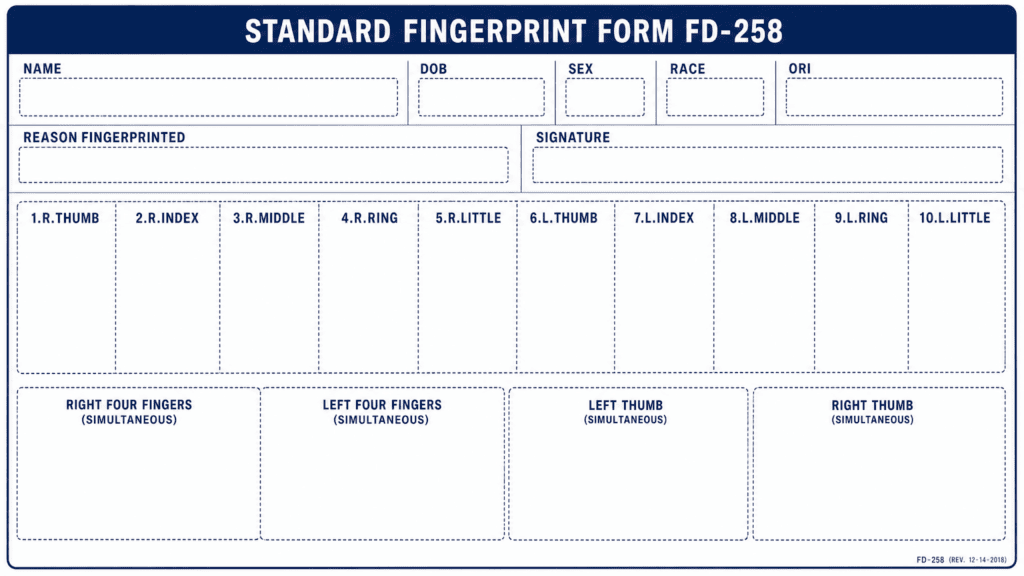
FD-258 Card Layout
The top section requires your personal information (Name, Date of Birth, Sex, Race, etc.) written in black or blue ink [2]. The bottom section contains 14 specific boxes for your fingerprints:
- Top Row (1-10): Individual rolled impressions for each finger, starting from the right thumb to the right little finger, then the left thumb to the left little finger.
- Bottom Row: Plain (slap) impressions taken simultaneously for the four fingers of each hand, plus individual plain impressions for each thumb.
2. Preparation: The Key to High-Quality Prints
Skin condition directly determines fingerprint quality. Dry, cracked, or overly sweaty hands will result in poor impressions that the FBI may reject.
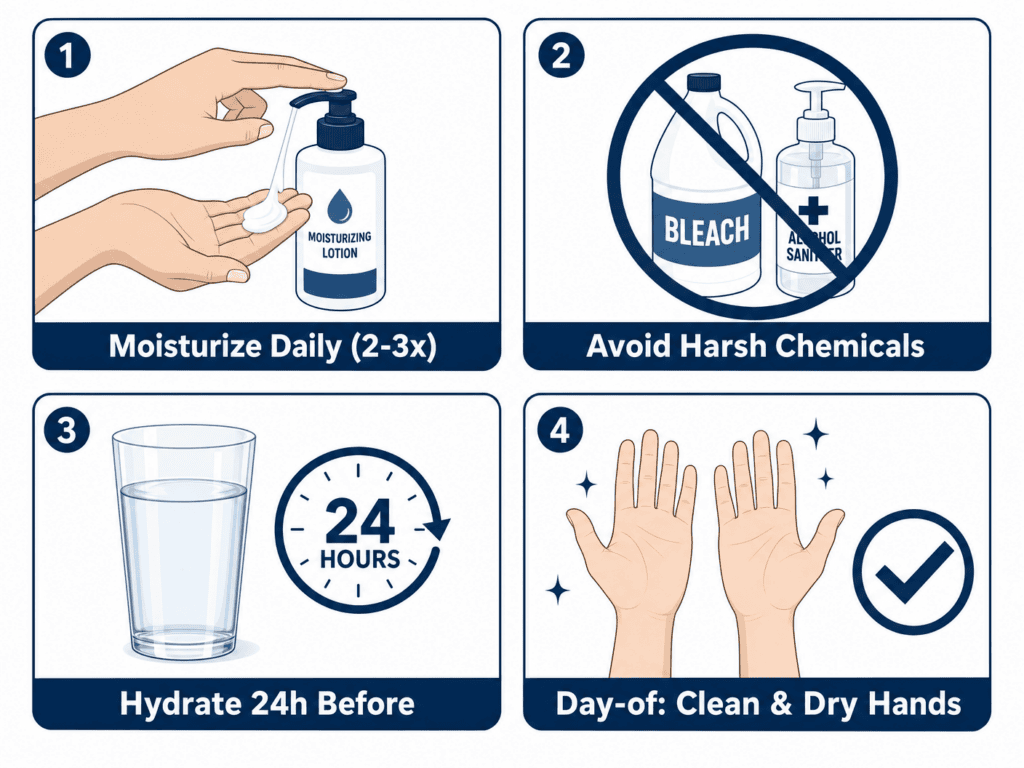
Hand Preparation Steps
*Days Before Fingerprinting:*
- Moisturize: Apply lotion 2–3 times daily. For severely dry skin, apply petroleum jelly and wear cotton gloves overnight.
- Hydrate: Drink plenty of water in the 24 hours leading up to your session.
- Avoid Harsh Chemicals: Keep away from bleach, chlorine, acetone, and alcohol-based sanitizers.
- Rest Your Hands: Hold off on activities that wear down ridges, such as weightlifting, rock climbing, heavy gardening, or playing stringed instruments.
*On the Day of Fingerprinting:*
- Ensure your hands are clean and completely dry.
- Do not apply lotion within 2 hours of fingerprinting.
- If your hands are naturally sweaty, wipe them briefly with rubbing alcohol just before starting [1].
3. Workstation Setup
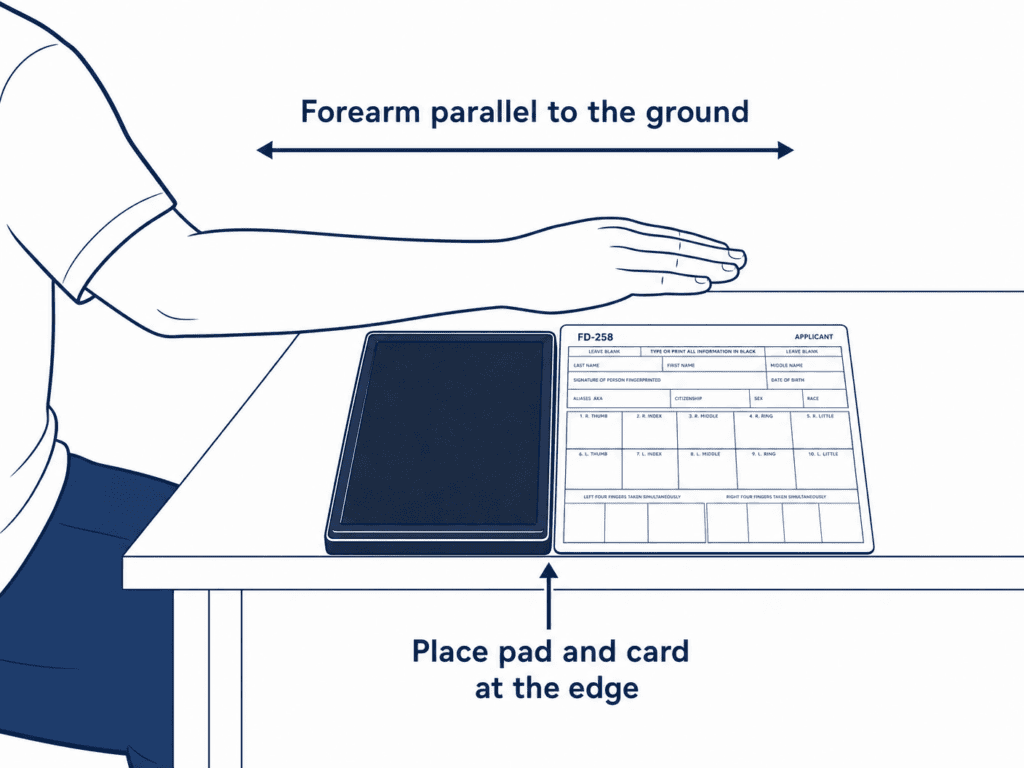
A proper physical setup is essential for achieving the correct rolling angle and pressure.
Workstation Setup
Place your high-quality fingerprint ink pad and the FD-258 card at the absolute edge of a smooth, hard, and level table. When seated or standing, your forearm should remain parallel to the ground. This position allows for a natural range of motion and prevents awkward twisting that can smudge the prints.
4. The “Touch-Roll-Lift” Technique
The FBI requires “rolled” impressions for the top 10 boxes on the card. This means the fingerprint must show the entire pad of the finger from nail edge to nail edge [1].
Step 1: Inking the Finger
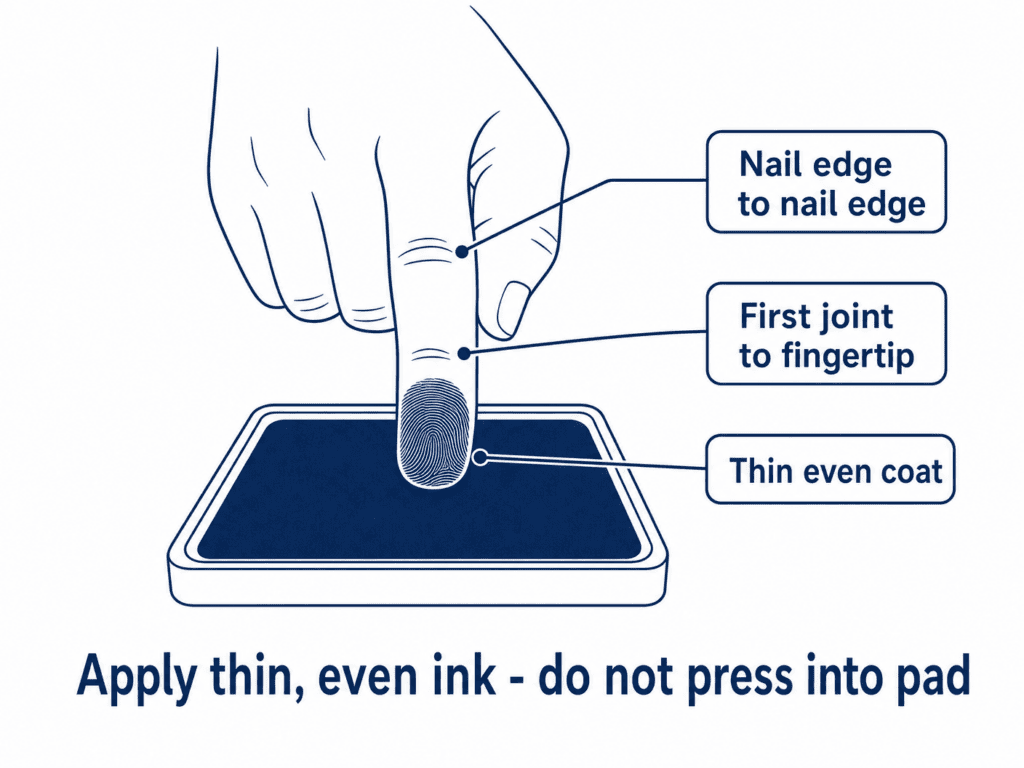
Apply a thin, even coat of ink. Do not press your finger hard into the pad, as this fills the ridge valleys with ink and causes smudging. The ink should cover from one nail edge to the other, and from the crease of the first joint to the fingertip.
Correct Inking Technique
Step 2: The Rolling Motion
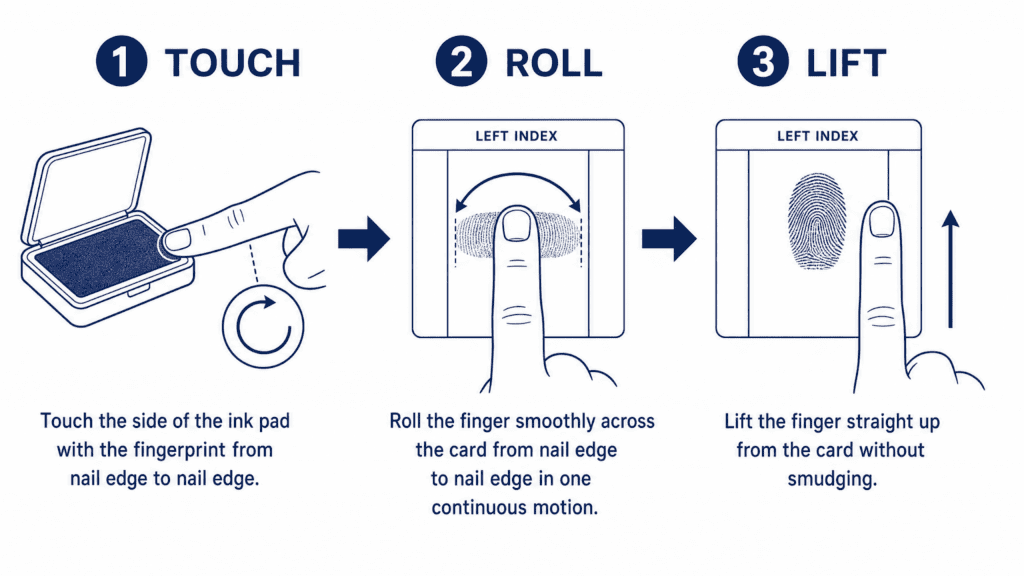
The standard method for rolled prints is the Touch-Roll-Lift technique.
Touch-Roll-Lift Technique
- Touch: Place the side of your finger (near the nail edge) onto the card.
- Roll: Roll the finger smoothly across the box to the opposite nail edge in one continuous motion.
- Lift: Lift the finger cleanly and straight up. Do not rock back or slide.
Step 3: Direction of the Roll
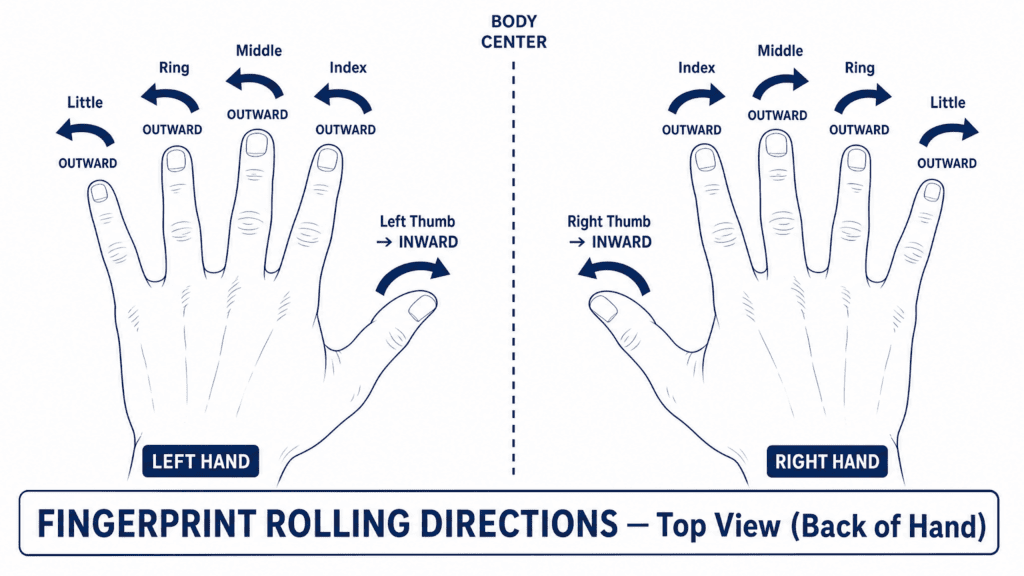
To take advantage of the natural movement of the forearm, you must roll from an “uncomfortable” position to a “comfortable” position [1].
Correct Rolling Direction
- Thumbs: Roll INWARD toward the center of your body — the left thumb rolls from left to right, and the right thumb rolls from right to left.
- Other Fingers: Roll OUTWARD, away from the center of your body.
5. Plain (Slap) Impressions
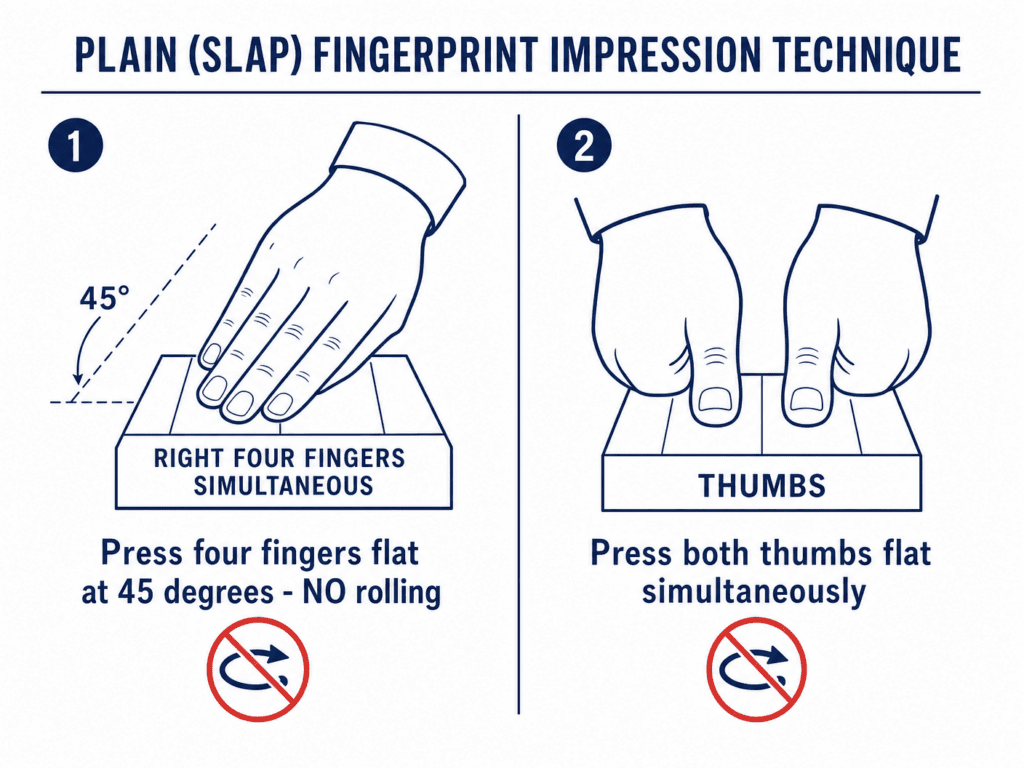
The bottom row of the FD-258 card requires “plain” or “slap” impressions. These are used by the FBI to verify the sequence and accuracy of the rolled impressions above them [1].
Plain Impressions Technique
For the four-finger boxes, press your four fingers flat against the card simultaneously at a 45-degree angle. For the thumb boxes, press both thumbs flat simultaneously. Do not roll these impressions; simply press straight down and lift straight up.
6. Quality Control: Good vs. Bad Prints
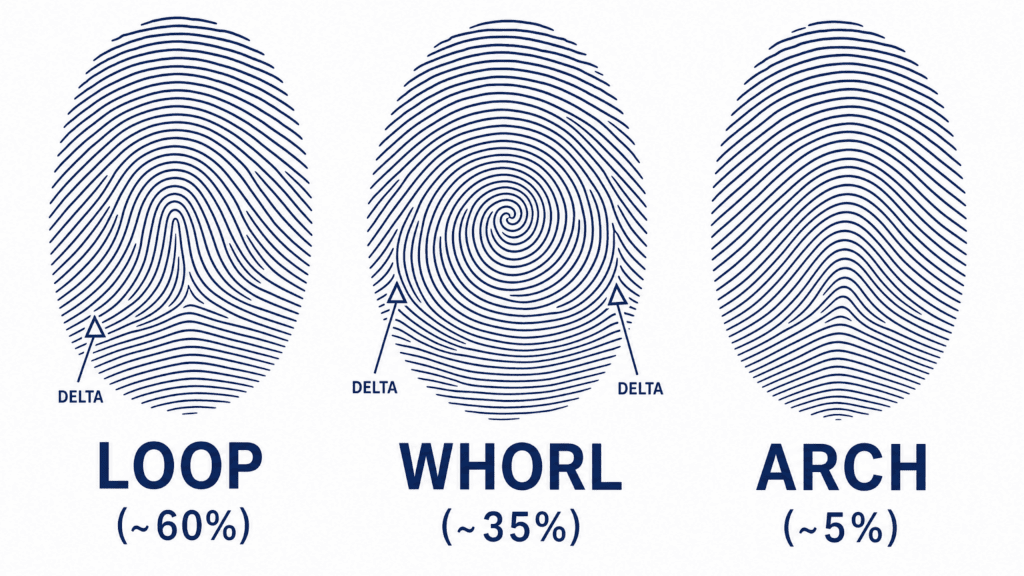
The FBI’s automated systems require clear ridge detail to classify and match fingerprints. Friction-ridge patterns generally fall into three primary types: Loops (~60%), Whorls (~35%), and Arches (~5%).
Fingerprint Patterns
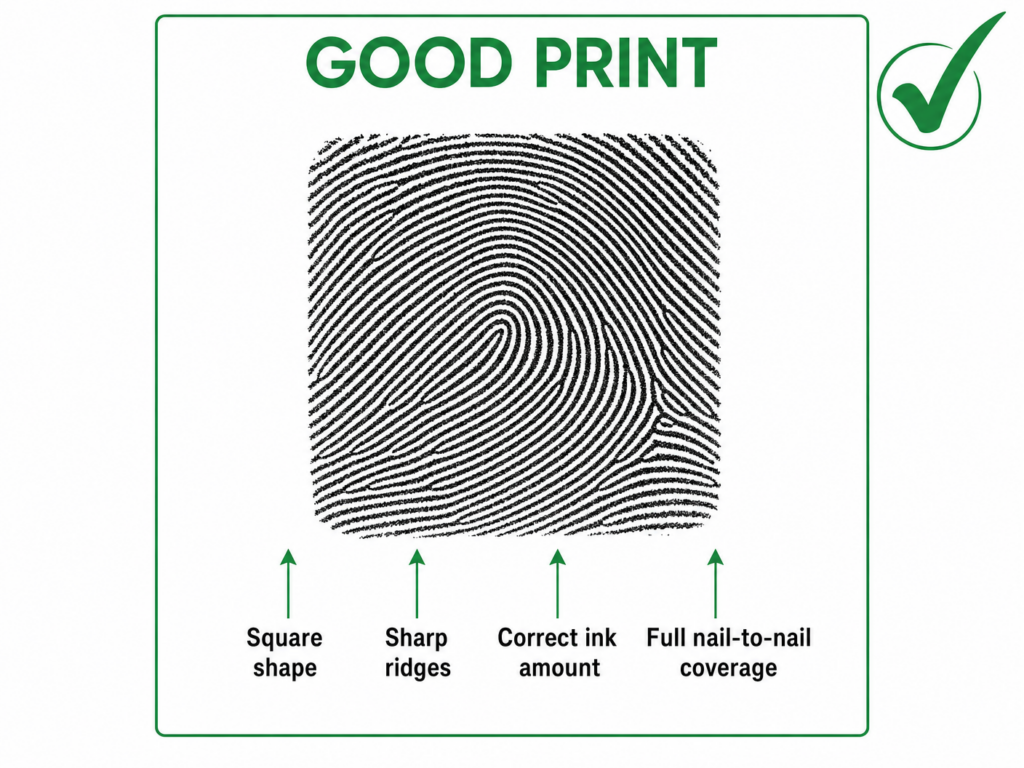
A GOOD rolled print will have a distinctly square shape, sharp ridge lines, and just enough ink to make the pattern readable without bleeding.
Good Print Example
Common Errors That Cause Rejection
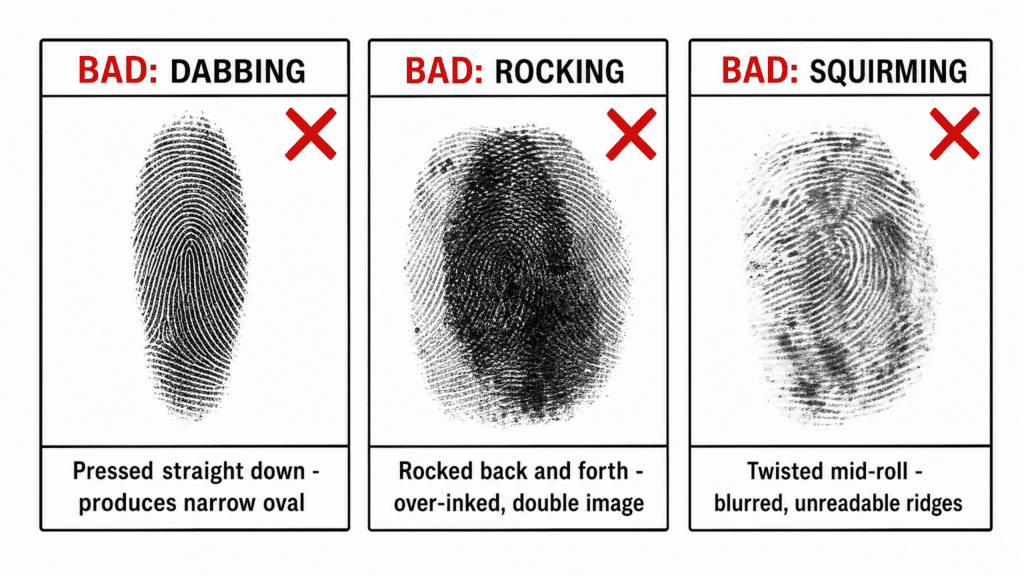
When reviewing your completed card, check for these three common errors that lead to FBI rejections:
Bad Print Examples
- Dabbing: Pressing the finger straight down instead of rolling. This produces a narrow oval shape that does not capture the full nail-to-nail pattern.
- Rocking: Rocking the finger back and forth on the card. This over-inks the paper and creates a smeared, double-image.
- Squirming: Twisting or sliding the finger mid-roll. This blurs the ridges entirely, making the print unreadable.
7. Submission Process
Once you have successfully completed your FD-258 card, you must submit it to the FBI Criminal Justice Information Services (CJIS) Division.
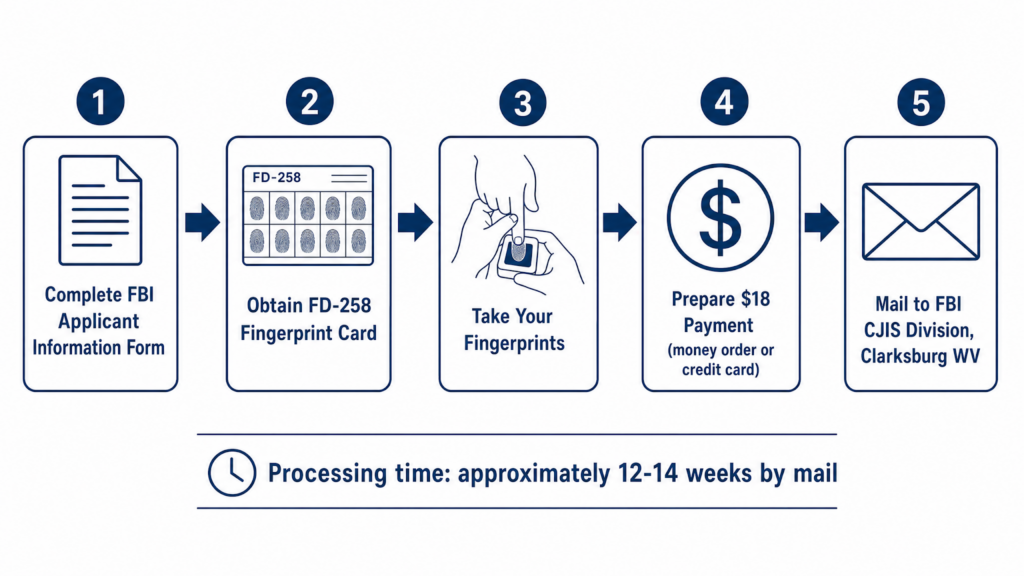
FBI Submission Process
The process involves completing the Applicant Information Form, obtaining your fingerprints, preparing the $18 processing fee, and mailing the packet to the FBI facility in Clarksburg, West Virginia [3]. Note that processing by mail can take several weeks.
Professional Assistance by Japan PI
Self-fingerprinting is challenging, and the FBI has strict quality standards. A rejected fingerprint card means starting the process over, causing significant delays to your visa or employment applications.
If you don’t have confidence in your self-fingerprinting, Japan PI is happy to assist you.
Japan PRD Professional Services
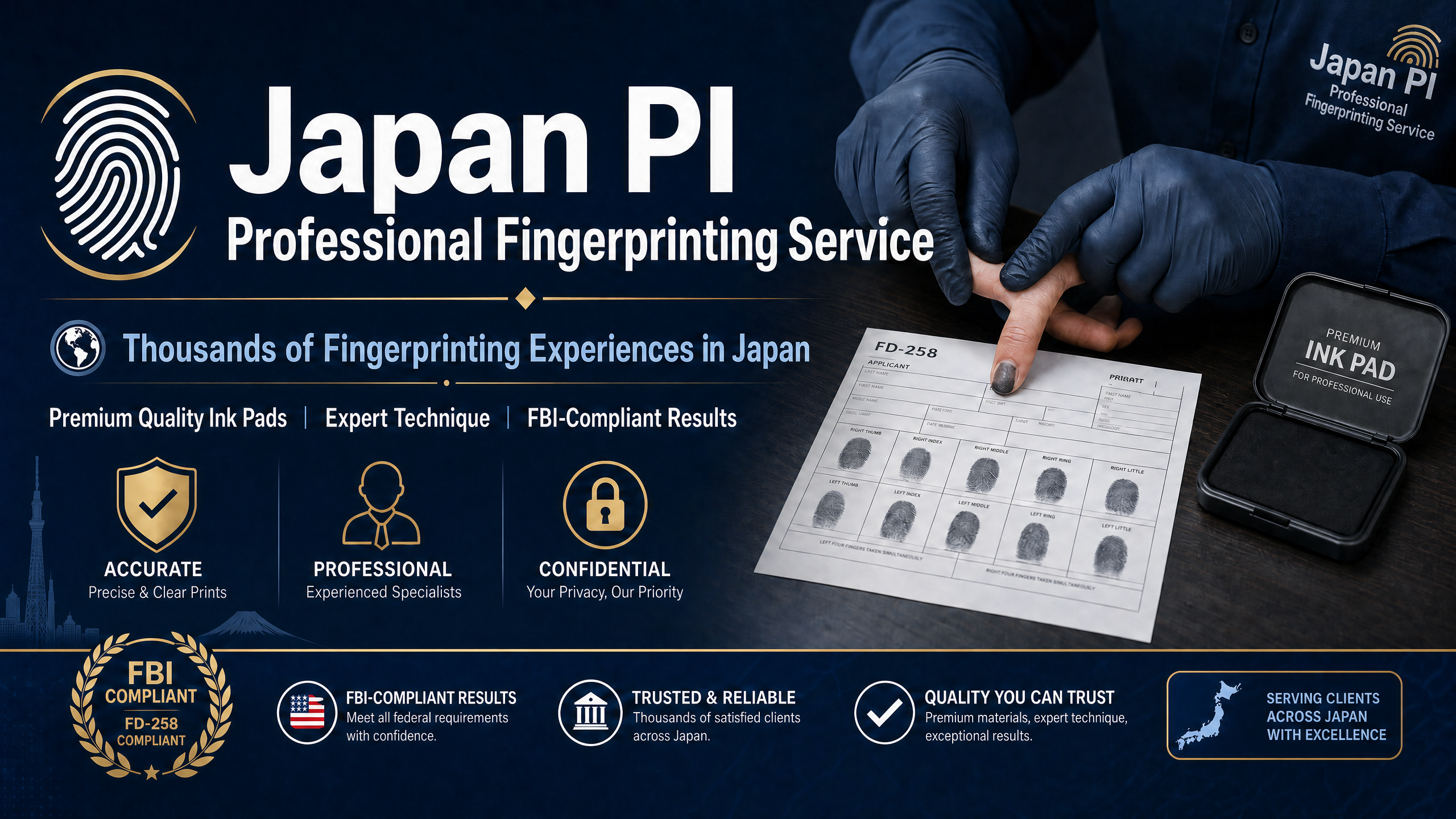
We have successfully processed thousands of fingerprints in the past. We strictly maintain the quality of our fingerprint impressions by procuring the best quality fingerprint pads available. Our specialists offer the professional skills and techniques required to take perfect prints, backed by more than a couple of thousand fingerprinting experiences across Japan.
Ensure your FBI Identity History Summary Check is accepted the first time. Contact Japan PI today for professional, FBI-compliant fingerprinting services.
Confidentiality Notice: Japan PI adheres to strict privacy and confidentiality standards for all client background and identity services.
References
[1] Federal Bureau of Investigation. “Recording Legible Fingerprints.” FBI.gov. https://le.fbi.gov/science-and-lab/biometrics-and-fingerprints/biometrics/recording-legible-fingerprints
[2] Bellevue Fingerprinting Service. “Fingerprint Card Instructions.” https://bellevuefingerprintingservice.com/services/ink-roll-fingerprinting/fingerprint-card-instructions/
[3] Office of the State Superintendent of Education. “How to Obtain a FBI Identity History Summary Check (IHSC).” DC.gov. https://osse.dc.gov/page/how-obtain-fbi-identity-history-summary-check-ihsc