
Not your neighborhood detective agency. A world-standard investigative firm in Japan.
Japan PI Inc. is a bilingual investigation and risk consulting firm with offices in Tokyo, Osaka, and Honolulu. Registered under Japan's Detective Business Act, we work for law firms, insurers, corporations, and private clients, handling cross-border matters in English and Japanese from intake through the final report.
| Name | Japan PI Inc.株式会社Japan PI |
|---|---|
| Founded | October 2002As QiQ Research, Inc., incorporated in Honolulu, Hawaii; renamed Japan PI Inc. in 2016 |
| Japanese Corporation | Established 2006As Quick Research Co., Ltd. (株式会社クイックリサーチ); renamed Japan PI in 2016 |
| Capital | ¥10,000,000 |
| Representative Director | Goro KoyamaLinkedIn profile → |
| Corporate Number | 9011101042541 |
| Business | Private investigation and risk consulting |
| PI Notification (Detective Business Act) | Tokyo Metropolitan Public Safety Commission No. 30160155 Osaka Prefectural Public Safety Commission No. 62161286 Detective agency signage (PDF) → Osaka Prefectural Police PI listing → |
| Offices | Tokyo 504, 2-6-20 Kita-shinjuku, Shinjuku-ku, Tokyo 169-0074, Japan Osaka 204, 4-20-9 Minamihorie, Nishi-ku, Osaka 550-0015, Japan Honolulu 1888 Kalakaua Ave C312, Honolulu, HI 96815, USA |
| Legal Adviser | Masako Banno, Attorney at Law (Sparkle Legal) |
| Legal Notice | Specified Commercial Transactions Act → |
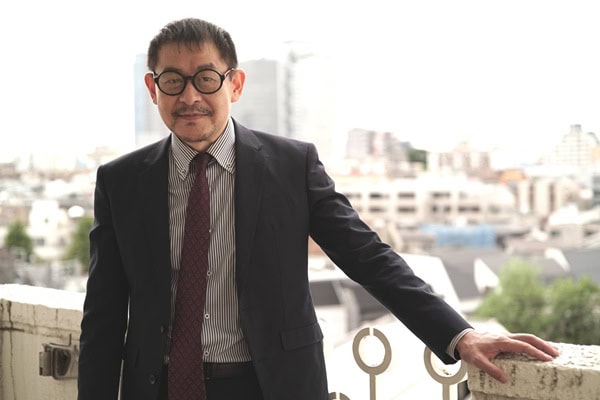
Goro Koyama小山 悟郎
CEO and Lead Investigator, Japan PI Inc.
Born in Tokyo in 1970, Goro has more than 30 years of investigative experience. His work centers on locating people—especially family members who have lost contact—and on cross-border matters: international locates and skip traces, corporate and individual due diligence, insurance and death verification, litigation support, and fingerprinting for FBI and other government submissions.
At Chuo University, Goro joined a martial arts club and, set back by injuries, fell to the bottom of it. He also couldn't see the point of the race everyone around him was running—the right university, the right company, a secure place in the status quo. He lost hope and grew sick of everything. Quitting school would anger his parents; quitting the club halfway would bring shame. Caught between the two, he ran.
He disappeared without telling anyone and drifted around Japan for several months. His parents hired an investigation agency to find him. Because his bank card activity showed he was moving from place to place, the agency advised them that he couldn't be found until he settled somewhere. Long before he handled jōhatsu cases himself, Goro experienced one from the other side—as the person being searched for.
Back in Tokyo, he decided to leave university and start working right away. He had already drifted through a string of dubious part-time jobs—paid medical trials, "midnight moves" for people skipping out on debts, work as a host, and hard-sell door-to-door sales. What hadn't changed was his urge to see the hidden side of society for himself. When he spotted a help-wanted ad for an investigation agency, he took the job as a kind of field study. In 1990s Japan, private investigation was seen as an underground trade: people who consulted a detective worried they would be overcharged, or that whoever learned their secrets might use them for blackmail. That was the world he walked into.
He apprenticed at an agency in Shibuya, Tokyo. Almost no one in the trade had been to university, and the senior investigators treated him as an outsider. He was also a poor driver, and they drilled him hard: anyone who can't even drive properly, they told him, has no business being a detective. Still, he believed that having been born, he owed it to others to be of some use—and that if this was his work, he would build skills second to none. He stuck it out through the dirty jobs and the low pay, spending ten years on surveillance, stakeouts, and interviews, and later managing cases and clients.
He never attended a language school or studied abroad. He taught himself English with US military radio and recorded news programs, often listening during long hours on surveillance. In time, investigative firms in the US and Hong Kong began sending him corporate work in Japan—organized-crime screening, corruption, and bid-rigging inquiries. Coached by those investigators, he combined their methods with Japanese tracing techniques and developed his own approach.
In 2002 Goro struck out on his own, founding QiQ Research, Inc. in Honolulu, Hawaii, with a branch office in Tokyo. He established a Japanese corporation, Quick Research Co., Ltd., in 2006 and opened an Osaka branch in 2011. After joining the World Association of Detectives in 2012, he made cross-border work for overseas law firms and investigators the heart of the business. In 2016 he renamed both companies—the Japanese corporation became Japan PI (株式会社Japan PI) and the Hawaii corporation Japan PI Inc.—and rebuilt the firm around international matters. He joined CII in 2017 and has since attended its annual meetings in Hong Kong, Chicago, and Prague to learn how colleagues in other countries work.
Having disappeared himself, Goro sees the family as the smallest unit of society. Locating parents, children, and relatives who have lost touch remains one of Japan PI's core services, and it is the work he puts the most of himself into. His guiding belief: unless you have struggled more than most, you cannot understand other people's hardship—or truly help them.
Goro has contributed to international documentaries and reporting on jōhatsu, Japan's "evaporated people"—both as an investigator who works these cases and as someone who once disappeared himself. His life's work now is helping Japan's investigation industry become a trusted profession and a working part of the country's legal infrastructure.
I had no degree, no career, and I had once run away from society altogether. This profession took me in anyway. That's why I want to see it earn real trust in Japan—not as a shady trade, but as a profession society relies on.
— Goro Koyama
CII 2026 AGM certificate of attendance →
Private investigation is a young profession, and how far it has developed varies widely from one country to the next. Working alongside investigators around the world, we see the differences every day.
Licensing regimes and professional bodies are in place, and investigators are a routine part of litigation, insurance, and corporate work.
The social climate has made it hard for the trade to grow. In Japan, the public still tends to picture "detectives" as people who follow cheating spouses.
In some jurisdictions, including a number of countries in the Islamic world, investigating private individuals is itself tightly restricted by law.
Where client demand and supporting legal frameworks are still taking shape, the profession has little room to mature.
Our goal is an investigation industry that Japan's legal system and society cannot do without. We pursue it through our casework and through industry associations in Japan and abroad.
How We WorkWe tell you up front what can and cannot be done in Japan. We don't take on low-odds work just to bill for it, and we never use methods that would put you at legal risk.
Japan's privacy rules differ sharply from those in the US or UK. We study both systems so we can go as far as the law allows here—and explain the differences to overseas counsel.
Through the Council of International Investigators (CII), the World Association of Detectives (WAD), and partner firms abroad, we keep adopting current methods and tools.
Investigation takes long hours on the street as well as careful analysis at the desk. Staying in the field is the foundation of the quality we deliver.
Before you commit, we'll give you a straight assessment of what an investigation in Japan can and cannot achieve.
Contact Us Call Us